
HOME ABOUT |
|
Machine Art
|
|
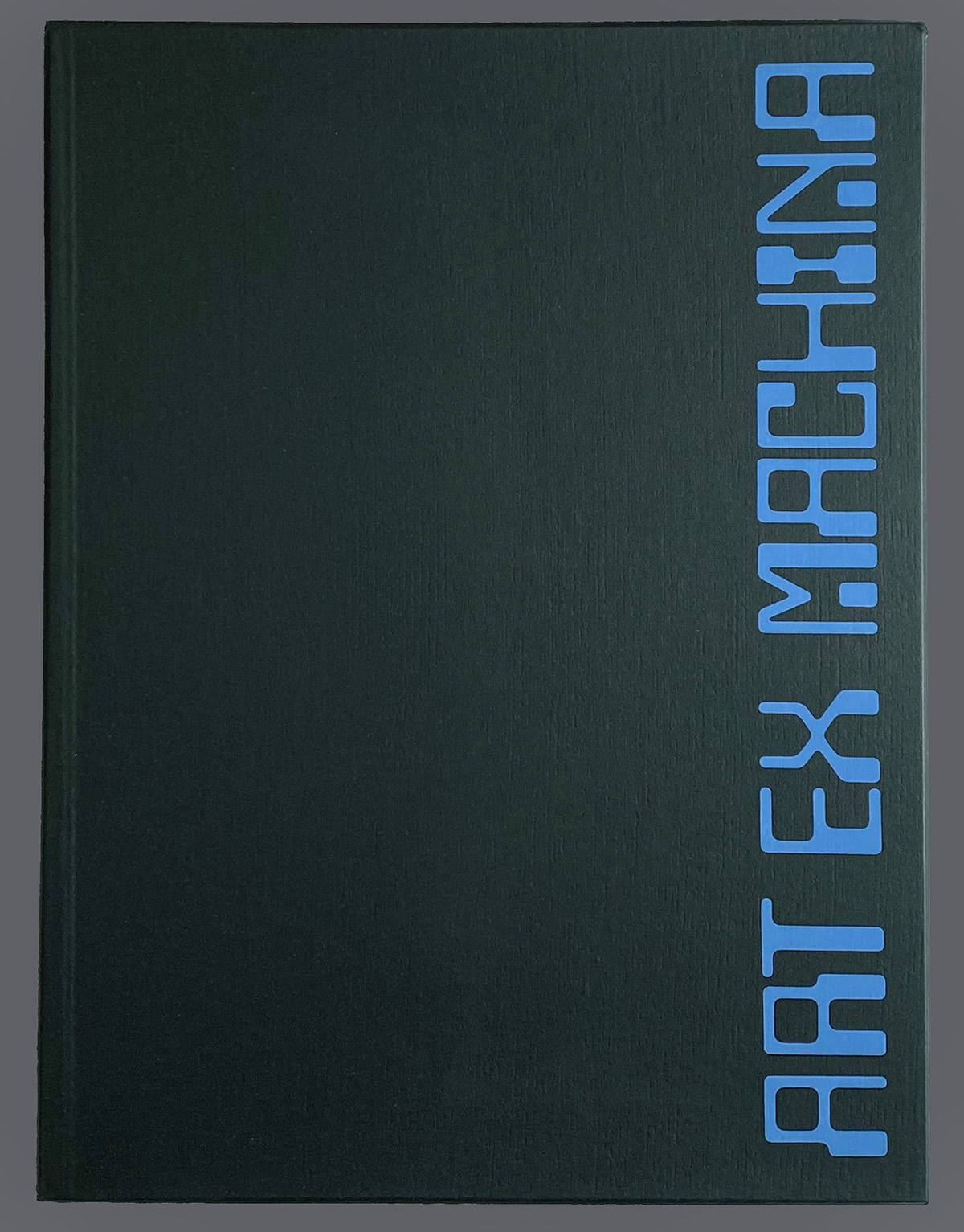
In his »ART EX MACHINA« portfolio the Canadian gallerist and publisher Gilles Gheerbrant presents works by six international protagonists of early computer-generated art in one computer art edition, that constitutes, in its own right, a small collection. Art Ex Machina
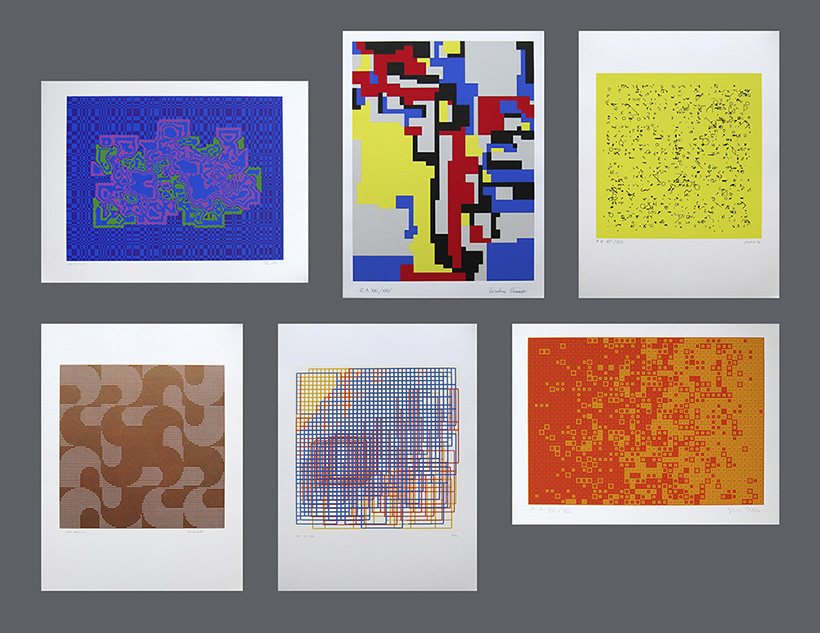
»Art Ex Machina« was published in 1972 in Montreal, in an edition of 200 copies. It contains six serigraphs, each with an artist's statement printed on the cover sheet, a title plate, plus two text tables—one in French, one in English—»ars ex machina« by Abraham A. Moles.
The Artists
The six participating artists are: computer art pioneer Hiroshi Kawano of Japan; from the U.S.A.: Kenneth C. (Ken) Knowlton; from Spain: Manuel Barbadillo, and from Germany: the digital art pioneers Frieder Nake, Georg Nees and—based in Paris and New York—Manfred Mohr.
Computer Art Serigraphs
Gheerbrant was one of the first gallerists to introduce computer art into the official art market. The printing technique of choice was that of hand-executed screen prints, and Gheerbrant had them masterly printed by Pierre Foisy.
Availability
This exhibit presents an edited version of the virtual exhibition launched earlier. 
|

imprint / contact privacy |